Stadium Lighting and Illumination is a major favorite for many engineers in the power or lighting fields. What if we spice that by saying that the lighting shall be provided by renewable energy sources and not heavy fuel generators?
This sounds crazy and at the same time interesting give the fact that stadiums are well known power hungry loads, so much that each nowadays has its own in-house sub-station.
This is very true and I would be hitting headlines in no time if I proposed to light a whole stadium with renewable energy. But this is not the case as of now, my main target is community based sports arenas that sadly can only be used during the day due to power problems.
Yesterday I happened to go and watch a football team during their usual practice at YMCA-Thika in Kenya. I have never seen the game played so well by eager youths who one day wanted to be in the big leagues. It was a good evening and the session went well. Sadly to my disappointment as the sun hid behind the clouds, the session was called to and end and all strolled for their stuff and headed home.How!!! Why should the sun dictate when we should work yet it has give us immense power and energy? (Solar & Wind Energy). Suppose the talented youth could train all night? They would be 20* better. YMCA-Thika could host floodlit events and also benefit by renting out the pitch.
It is for such reasons that I have embarked on a study/research to see how Community Stadium Illumination could help increase opportunity for youths in developing countries. The study will last 2months till end of August. I will post updates and pics as the study goes on. Let me go and talk to the management of YMCA-Thika before commencing further.
Thursday, June 30, 2011
KPLC is now Kenya Power
With time come a change and that is why The Kenya Power & Lighting Company (as was previously known) is now simply, Kenya Power. Kenya Power is Kenya's largest power distribution company that feeds power to all places.
This corporate re-branding has come at a time when the company is undertaking some organization strategies to focus more on the customer and service delivery. I must say that the new logo is as they wanted, neat and clean.
The Logo Design Competition was a nationwide competition that attracted many designers with their unique designs of the logo to be, even me i had mine. This was last year (2010). The deadline came and all who wanted to participate had submitted. Still don't know who won, but congrats to him/her + their runners up. Though it had taken time but still good, worth the delay.
From KPLC website...
KPLC, which will now be known as Kenya Power, embarked on a corporate culture change and rebranding exercise in 2009 with the aim of transforming the distribution network in order to render more reliable and responsive services to customers and to sustain its good financial performance.
According to Kenya Power Managing Director and CEO, Eng. Joseph Njoroge, the project entailed creation of a new organisational culture, a new logo, and a corporate brand which supports the company’s long term objectives and meets the increasing expectations of its customers.
In a presentation he made to guests during launch of the new brand at the Kenyatta International Conference Centre, Eng. Njoroge revealed that the company anticipates electricity demand to climb to 15,000 MW by the year 2030 owing to economic growth as envisioned by the government.
Wednesday, June 8, 2011
The Altamont Wind Farm
QUICK FACTS
Location: Alameda County, California, US
Maximum Output: 576MW
Annual Power Generation 1.1TWh
No of Turbines: 4,930
Installation Date: 1981
Condition: Good to Poor
Image:theage.com.au
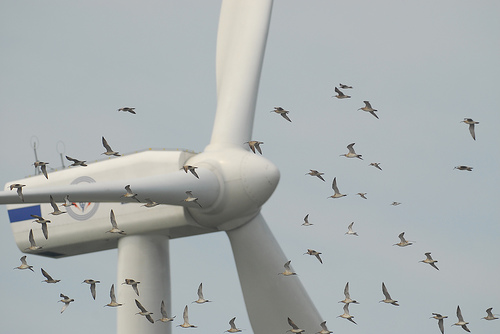
The Altamont wind farm, constructed in the 1980’s was at one time the largest wind farm in the world in terms of capacity. This farm was well known by the sheer number of bird mortality at the site. The farm is now one of the oldest wind farms in the US.
The wind farm is composed of many small wind turbines which are regarded as old since the station was constructed a long time ago. Many of these turbines are being replaced with better efficient wind machined which need not to spin fast for power generation. 40kW, 65kW -100kW is the range of most turbines in the pass, installed on metal lattices, while the 100kW are on tubular concrete towers.
The Altamont Wind farm is owned by almost a dozen companies. During the installation date, no clear Environmental Impact Assessment (EIA) was done in terms of how the turbines would interact with the wildlife and the result was the deadliest wind farm in the world, in terms of avian mortality.
Though the Altamont is known for its powerful wind speed, it is an important bird migration route, and its green-grass covered hills provide food for many species for raptors. The raptors and the federally protected Golden Eagles are killed annually. 4700 of these birds meet their demise in the wind farm annually.
Location: Alameda County, California, US
Maximum Output: 576MW
Annual Power Generation 1.1TWh
No of Turbines: 4,930
Installation Date: 1981
Condition: Good to Poor
Image:theage.com.au
The Altamont wind farm, constructed in the 1980’s was at one time the largest wind farm in the world in terms of capacity. This farm was well known by the sheer number of bird mortality at the site. The farm is now one of the oldest wind farms in the US.
The wind farm is composed of many small wind turbines which are regarded as old since the station was constructed a long time ago. Many of these turbines are being replaced with better efficient wind machined which need not to spin fast for power generation. 40kW, 65kW -100kW is the range of most turbines in the pass, installed on metal lattices, while the 100kW are on tubular concrete towers.
The Altamont Wind farm is owned by almost a dozen companies. During the installation date, no clear Environmental Impact Assessment (EIA) was done in terms of how the turbines would interact with the wildlife and the result was the deadliest wind farm in the world, in terms of avian mortality.
Saturday, June 4, 2011
10 Steps to install a small wind power project
Thinking of installing a domestic wind turbine?
Good, now read on....
maintenance on the system.Enjoy your system.
Good, now read on....
Step1
Measure the electrical consumption of your domestic appliances in KWh
Step 2
Access your wind resource.
Step3
Head to the dealer and select a turbine and a tower basing your selection on the wind resource. The dealer will advice you.
Step4
Contact the municipal authority or council for laws or regulations that may hinder your project.
Step5
Make sure you have a permit to erect a structure beyond a certain limit so that it does not endanger your neighbours.
Step6
Contact the local utility power supply to sign feed-in grid tariff if any.
Step7
Obtain a license for the wiring done from your turbine to the tower and the grid. This can be arranged by the local utility company.
Step8
Time to order the parts including the turbine and generator.
Step9
Install the system
Step10
Commission the system, but you'll probably require a CERTIFIED Installer to do this. Then perform regularmaintenance on the system.Enjoy your system.
Tuesday, May 31, 2011
Avian Mortality by Wind Turbines
Since the commissioning of early commercial; wind turbines, the idea of bird mortality by the blades of wind turbines has never settled. many biological researchers have protested the commissioning of large wind farms citing massive death of birds in future.
In this post we are going to explore this concept of death of birds due to wind turbines.
The Reality
When a wind farm is installed in the path or a migratory route for birds, during the migrations the birds will come in contact with the large spinning blades and the result? Bird Mortality.
But on the other hand it us very uncommon for a wind farm to be cited in a migratory path since studies would have already revealed this in the early stages of planning.
"To help our understanding of turbine hazards to birds we'd like to make an analogy, to your bicycle. Turn your bike upside down or put it in a work rack, set it to the highest gear...the one you use to go fast on a level slope.... and now move the wheel slowly with your hand. The chain moves rapidly with only a few degrees of wheel rotation. This symbolizes today's cutting edge 1.5 mW turbines, which have a very large surface area of blade exposed to the wind and a gearbox that turns the dynamo quickly while the blades move slowly. Birds dodge these slow moving blades relatively easily.Now put the bike in the lowest gear...the one you use to climb hills...and move the wheel with your hand fast enough to turn the chain as fast as before. That symbolizes the 20-year-old "bird-o-matic" wind turbine design. Small blades with small surface areas have to turn rapidly to overcome the magnetic force of the dynamos, which generate electricity.Recapping: small blades, low surface area, lots of dead birds possible; very big blades, with large surface area exposed to wind, very few dead birds." From treehugger.com
In this post we are going to explore this concept of death of birds due to wind turbines.
The Reality
When a wind farm is installed in the path or a migratory route for birds, during the migrations the birds will come in contact with the large spinning blades and the result? Bird Mortality.
But on the other hand it us very uncommon for a wind farm to be cited in a migratory path since studies would have already revealed this in the early stages of planning.
"To help our understanding of turbine hazards to birds we'd like to make an analogy, to your bicycle. Turn your bike upside down or put it in a work rack, set it to the highest gear...the one you use to go fast on a level slope.... and now move the wheel slowly with your hand. The chain moves rapidly with only a few degrees of wheel rotation. This symbolizes today's cutting edge 1.5 mW turbines, which have a very large surface area of blade exposed to the wind and a gearbox that turns the dynamo quickly while the blades move slowly. Birds dodge these slow moving blades relatively easily.Now put the bike in the lowest gear...the one you use to climb hills...and move the wheel with your hand fast enough to turn the chain as fast as before. That symbolizes the 20-year-old "bird-o-matic" wind turbine design. Small blades with small surface areas have to turn rapidly to overcome the magnetic force of the dynamos, which generate electricity.Recapping: small blades, low surface area, lots of dead birds possible; very big blades, with large surface area exposed to wind, very few dead birds." From treehugger.com
Tuesday, May 10, 2011
How to Rewind an Electric Motor [Part 1]
How to Rewind an Electric Motor
from wikiHow - The How to Manual That You Can EditElectric motors are relatively simple mechanical devices, but rewinding the coils on a DC motor is a precise task that should only be undertaken by those who with experience in mechanical or electrical repair. A mistake or poorly-performed rewind job will result in a motor that doesn’t work. At that point, your only options are to buy a new motor or to take it to a professional shop for repair. Given the variety of motors and types of windings, this can only be a general article on rewinding. If you don’t understand the terminology, you shouldn’t be rewinding a motor; once you start removing the original coils, there’s no going back.
Steps
- Clean your work surface to make sure it’s free of dirt and dust.
- Remove the motor housing to reveal the windings.
- Document the present configuration by taking notes or photographs. You may even wish to videotape your deconstruction so that you can precisely recreate the original winding pattern and connections.
- Take the wire from the tabs on the brush pads. Bend the tabs gently (and as little as possible) and completely remove the wire from the tabs before cutting the coils of the wind.
- Cut the coils in the wind free from the motor. The easiest place to cut is at the tops of the coils at the top of the armature. Count the number of winds in each coil so that you can rebuild the motor to its original configuration.
- Check the insulation revealed before you rewind an electric motor. If it’s in good shape, you can put it back in place before beginning your rewind. You can replace burned or damaged insulation with similar material or insulating tape.
Sunday, April 10, 2011
Introduction to Wind Power & Energy from the Wind
Wind has been in use since the early days of civilization but its use is what differs from today’s world. In those days wind was used primarily to drive ocean-going ships that connected continents and opened up international trade. One of the famous winds is the Monsoon that held up local and international trade.
In western countries however, wind was a major component and energy source in pumping water. The idea of using wind to generate electricity had not been given a thought then.The use of wind to generate electricity was realized in the 19th century when the 12 kW DC windmill generator constructed by Brush in the USA and the research undertaken by LaCour in Denmark.
However, for much of the twentieth century there was little interest in using wind energy other than for battery charging for remote dwellings and these low-power systems were quickly replaced once access to the electricity grid became available.
The onset of oil is considered to have hit hard on the development of Wind Energy since it was cheap and plenty. However in the 1990s when the price of oil suddenly rose, due to uncertainty of quantity, the need for a reliable source of energy that was environmentally-friendly started again. This time government funded projects led the way.
As the development of Wind energy has gone beyond borders, many concepts and designs have been proposed and tested on a massive scale. Countries and government funded projects have shown some fascinating designs. The Golding of 1955) and Shepherd and Divone in Spera of 1994, record the 100 kW 30 m diameter Balaclava wind turbine in the then USSR in 1931 and the Andrea Enfield 100 kW 24 m diameter pneumatic design constructed in the UK in the early 1950s. In this turbine hollow blades, open at the tip, were used to draw air up through the tower where another turbine drove the generator. Horizontal and Vertical Axis Wind Turbines have emerged as the two major conceptual designs used commercial. Germany is currently leading with the invention followed by Sweden.
In western countries however, wind was a major component and energy source in pumping water. The idea of using wind to generate electricity had not been given a thought then.The use of wind to generate electricity was realized in the 19th century when the 12 kW DC windmill generator constructed by Brush in the USA and the research undertaken by LaCour in Denmark.
However, for much of the twentieth century there was little interest in using wind energy other than for battery charging for remote dwellings and these low-power systems were quickly replaced once access to the electricity grid became available.
The onset of oil is considered to have hit hard on the development of Wind Energy since it was cheap and plenty. However in the 1990s when the price of oil suddenly rose, due to uncertainty of quantity, the need for a reliable source of energy that was environmentally-friendly started again. This time government funded projects led the way.
As the development of Wind energy has gone beyond borders, many concepts and designs have been proposed and tested on a massive scale. Countries and government funded projects have shown some fascinating designs. The Golding of 1955) and Shepherd and Divone in Spera of 1994, record the 100 kW 30 m diameter Balaclava wind turbine in the then USSR in 1931 and the Andrea Enfield 100 kW 24 m diameter pneumatic design constructed in the UK in the early 1950s. In this turbine hollow blades, open at the tip, were used to draw air up through the tower where another turbine drove the generator. Horizontal and Vertical Axis Wind Turbines have emerged as the two major conceptual designs used commercial. Germany is currently leading with the invention followed by Sweden.
Thursday, April 7, 2011
Kenya's Evans Wandogo receives Gorbachev Award
Mikhail Gorbachev celebrated his 80th birthday at a star-studded charity gala in London, where he honoured Sir Tim Berners-Lee, the founder of the internet as a "man who changed the world".
The former Soviet leader personally chose Sir Tim, CNN founder Ted Turner, and Kenyan engineer Evans Wadongo, as the winners of the inaugural Gorbachev Awards.
The Mikhail Gorbachev - The Man Who Changed The World gala at the Royal Albert Hall was hosted by Kevin Spacey and Sharon Stone.
It featured performances from Dame Shirley Bassey, Katherine Jenkins, Bryan Ferry, Paul Anka, Melanie C, Valery Gergiev and the London Symphony Orchestra.
Arnold Schwarzenegger, the former governor of California, Lech Walesa, the former Polish president, and actresses Goldie Hawn and Milla Jovovich were among stars who made a red-carpet entrance to the event.
Also due to attend were Israeli president Shimon Peres, former Prime Minister Sir John Major and England football manager Fabio Capello.
Proceeds from the evening were to be donated to the Raisa Gorbachev Children's Institute for Transplantology and Haematology in St Petersburg, and to Macmillan Cancer Support.
The former Soviet leader personally chose Sir Tim, CNN founder Ted Turner, and Kenyan engineer Evans Wadongo, as the winners of the inaugural Gorbachev Awards.
The Mikhail Gorbachev - The Man Who Changed The World gala at the Royal Albert Hall was hosted by Kevin Spacey and Sharon Stone.
It featured performances from Dame Shirley Bassey, Katherine Jenkins, Bryan Ferry, Paul Anka, Melanie C, Valery Gergiev and the London Symphony Orchestra.
Arnold Schwarzenegger, the former governor of California, Lech Walesa, the former Polish president, and actresses Goldie Hawn and Milla Jovovich were among stars who made a red-carpet entrance to the event.
Also due to attend were Israeli president Shimon Peres, former Prime Minister Sir John Major and England football manager Fabio Capello.
Proceeds from the evening were to be donated to the Raisa Gorbachev Children's Institute for Transplantology and Haematology in St Petersburg, and to Macmillan Cancer Support.
Tuesday, March 29, 2011
Kenya Go-Green Expo 2011
The National Environment Management Authority (NEMA) is hosting an exhibition dubbed: Go Green Expo 2011 from 29th-31st March 2011 at, Kenyatta International Conference Center - Court Yard.
Green Economy has been described by UNEP as economic growth that reduces carbon emissions and pollution, while enhancing energy and resource efficiency. The Exhibition will provide an opportunity to showcase green initiatives by diverse stakeholders contributing to green economy in Kenya.
The Go Green Expo aims at show casing companies from all sectors, multi-nationals, NGO’s, private sector, public sector, individuals, schools, universities, hospitals, among others whose initiatives are contributing to a green economy. Initiatives that contribute to a green economy contribute low carbon emissions. High carbon emissions contribute to climate change Past economic growth strategies focused on rapid accumulation of physical, financial and human capital at the expense of excessive depletion and degradation of natural capital which includes natural resources and ecosystem goods and services.
Economic growth in recent decades has been achieved through drawing down natural resources leading to widespread ecosystem degradation and loss without allowing adequate time for stock of natural capital to regenerate. The transition to green economy is a key intervention in safeguarding global economies from the effects of climate change. The Go Green expo:
1. will offer exhibitors an opportunity to demonstrate the benefits of a green economy as being a one time cost and once invested in systems and equipments it contributes to national good by ensuring that raw materials are efficiently used and wasteful production is avoided.
2. will offer exhibitors a chance to show case green products and services that they manufacture and provide
3. Will provide an opportunity for the public to be educated on a green economy and how they can tap into existing international funding for example through carbon trading
4. Will demonstrate how stakeholders whohave embraced a green economy have beneffited in international markets. Goods that have been produced in an environmental friendly manner are advantaged as they stand a greater chance to be purchased in global markets.
Plan to Attend.
Source: NEMA Website
Green Economy has been described by UNEP as economic growth that reduces carbon emissions and pollution, while enhancing energy and resource efficiency. The Exhibition will provide an opportunity to showcase green initiatives by diverse stakeholders contributing to green economy in Kenya.
The Go Green Expo aims at show casing companies from all sectors, multi-nationals, NGO’s, private sector, public sector, individuals, schools, universities, hospitals, among others whose initiatives are contributing to a green economy. Initiatives that contribute to a green economy contribute low carbon emissions. High carbon emissions contribute to climate change Past economic growth strategies focused on rapid accumulation of physical, financial and human capital at the expense of excessive depletion and degradation of natural capital which includes natural resources and ecosystem goods and services.
Economic growth in recent decades has been achieved through drawing down natural resources leading to widespread ecosystem degradation and loss without allowing adequate time for stock of natural capital to regenerate. The transition to green economy is a key intervention in safeguarding global economies from the effects of climate change. The Go Green expo:
1. will offer exhibitors an opportunity to demonstrate the benefits of a green economy as being a one time cost and once invested in systems and equipments it contributes to national good by ensuring that raw materials are efficiently used and wasteful production is avoided.
2. will offer exhibitors a chance to show case green products and services that they manufacture and provide
3. Will provide an opportunity for the public to be educated on a green economy and how they can tap into existing international funding for example through carbon trading
4. Will demonstrate how stakeholders whohave embraced a green economy have beneffited in international markets. Goods that have been produced in an environmental friendly manner are advantaged as they stand a greater chance to be purchased in global markets.
Plan to Attend.
Source: NEMA Website
Monday, March 28, 2011
Lake Turkana Wind Power Project Given a Go - Ahead
Related Posts:
Lk.Turkana Wind Power Project - Details
Wind Power In Kenya - Ngong Wind Power Station
The Lk. Turkana Wind Power Project which was to start installation last year has finally been given the green light. This had followed months of delay from the Government of Kenya, through the Ministry of Energy in handing out a Letter of Support. The Letter of Support provides two components ie
1. An assurance from the firm's lenders that the Government will step in and help in case KPLC (Kenya Power & Lighting Company) will
be unable to buy the power generated.
2.IPPs (Independent Power Producers) will obtain liquidity support through the IDAPRG (International Development Association Partial Risks
Guarantees) while the termination and political risks will be covered by MIA (Multilateral Insurance Agency)
Mr.Wageningen, the company's chairman said that they have raised Sh.20Billion, 30% of the estimated project cost and saying that lenders have shown positive attitude towards the project.
The Lake Turkana Wind Power Project will involve the installation of 365 Vestas Wind Turbines each with a max output of 865kW and a combined output of 300MW. Work will start in October 2011. First 50MW will be ready in September 2013.And by the close of 2014, the project will be producing 300MW into the National Grid.
Lk.Turkana Wind Power Project - Details
Wind Power In Kenya - Ngong Wind Power Station
The Lk. Turkana Wind Power Project which was to start installation last year has finally been given the green light. This had followed months of delay from the Government of Kenya, through the Ministry of Energy in handing out a Letter of Support. The Letter of Support provides two components ie
1. An assurance from the firm's lenders that the Government will step in and help in case KPLC (Kenya Power & Lighting Company) will
be unable to buy the power generated.
2.IPPs (Independent Power Producers) will obtain liquidity support through the IDAPRG (International Development Association Partial Risks
Guarantees) while the termination and political risks will be covered by MIA (Multilateral Insurance Agency)
Mr.Wageningen, the company's chairman said that they have raised Sh.20Billion, 30% of the estimated project cost and saying that lenders have shown positive attitude towards the project.
The Lake Turkana Wind Power Project will involve the installation of 365 Vestas Wind Turbines each with a max output of 865kW and a combined output of 300MW. Work will start in October 2011. First 50MW will be ready in September 2013.And by the close of 2014, the project will be producing 300MW into the National Grid.
Subscribe to:
Posts (Atom)