For a long time I have always wanted to Design, Construct and Commission my own substation so that I can understand to the detail what exactly works in there. Its very rare that a power company or distributor will just allow anyone to access a substation so I came up with the idea of Umeme 1.
Umeme 1 is a virtual substation that will exist only in CAD drawings and here on my blog. I will follow strictly all laid down regulations that guide power engineers to come up with a working substation. On th good side, I will promptly upload the documents like the ESIA, EIA and even testing documents for earthing and grounding.
This project will take up to 2 years or so depending on my research speed after which I plan to compact all documents to publish my findings. The substation will be called UMEME which is a swahili word for electricity and will be located along the Nairobi - Naivasha highway. Feel free to comment and correct me in case you stumble on an error or miscalculation for sag etc.
So there it is, the start of a long project. In this course I hope I will inspire another Power Engineer somewhere to do something out of the ordinary that will change the way to transmit electricity.
Image Credits: http://www.pike.com
Saturday, July 6, 2013
Wednesday, June 26, 2013
Power Grid Board Game Review - Electrical Eng. Game!
One of the most iconic games of the last ten years. It had a stint as the number one game on Board Game Geek. It has close to a dozen awards, nominations, and recommendations. It has had seven expansions and two spinoff games. The green box is a staple in most hobby game stores. It is Power Grid, or Funkenschlag as it is known in Germany.
Designed by Friedemann Friese in 2004, Power Grid is one of the most recognized games in the industry.Power Grid is a 2-6 player game that takes about 2 hours to play. Expect a game to last a little longer if you are playing with new players and if you are playing with five or six players. Each player takes the role of a powerplant company. The goal is to power the most cities with power on the last round of the game. The game takes place in rounds that have five phases each.
These include determining turn order, auctioning power plants, purchasing resources, building cities, and bureaucracy (this includes powering your plant to get money, replacing the lowest or highest power plant in the market [depending on the Step the game is on], and replenishing the resource market). Play continues in this fashion until a player reaches the required number of cities to trigger the end game (this differs based on the number of people that are playing).The first phase is simply determining the turn order for the round.
Unlike most games that have a set clockwise turn order, Power Grid determines who is winning and losing the game based on how many cities each player has. If there is a tie, the player who has the higher-numbered power plant is considered to be in the lead. Turn order is an important part of the game. The player in first place has a disadvantage as he is the last person that is able to buy resources and build cities, but he is the first person to go during the auction phase. This mechanism keeps the game balanced and helps prevent a runaway leader. Not everyone likes the mechanic, but most people do.
Friday, March 29, 2013
Cheap & Durable Raspberry Pi Case
Since the Raspberry Pi was released, there has been a frenzy to make a case for it since the Pi comes as a circuit-board or motherboard only. There have been many individuals who have invested some cool cases for the pi and even some using LEGO bricks to achieve this. Great work.
However these do not come easy for the pocket, which will not go inline with the whole idea of making the Pi cheap, so I have made one that is a recycle from the many devices that we buy.
Thursday, March 21, 2013
Raspberry Pi Basic Setup - Hardware
Since I got my hands on the Raspberry Pi (Model B) its been tinkering and tinkering. As you can see in the image above, I built my own case with the help of JKUAT Arch. colleague of mine who assisted with the dimensions and the white cardboard.
Away from that, today I want to show you the basic hardware that when out together with the Pi will make a successful run.
Sunday, February 24, 2013
Electric Outdoor Substation Model Project
Earlier in the year I mentioned that I would embark on a year long project to understand the inner workings on an outdoor electric substation. So here I start after taking some time off to study my Chinese - which in fact has improved.
Now this project will basicaly entail creating a model of each unit that is in a subsytation, link them using wires and perhaps use 240V to simulate the working. To add some salt, I will embeed my ArduinoUNO + Raspberry Pi and a few LEDs to make a SCADA system hopefully controlled from my PC or my phone to shutdown/on the sub-station.
Yeah, I know this sounds crazy but it will require funds plus careful planning and drawings to ascertain the project. I will document everything like it would be in a real life project including the Tendering and delivery of the equipment - all this for learning.
Also I noted that there are specific softwares that are used to design substations, so I hope they have 90 Days trials, this will come in handy.
My Chinese exams are in May (HSK) so incase my english starts to depeceiate significantly, kindly notify me :-) :-)
Here in my country Kenya we are going to the polls on 4th of March so hope there will be peace and no violence, am praying very hard for peace.
Anyway let me start...Have an electrifying week + Peace to all Kenyans
Image Credits: Buildpedia.com
Sunday, January 6, 2013
Wind Power Kenya is 3 Years Old
Happy New Year to all my readers, hope your year started on a high voltage. Today Wind Power Kenya turns 3 years old, a milestone and remarkable achievement it is. Looking back its been a long and informative electric journey and I am very thankful to you all for taking time to read, comment & correct me where I make a mistake.
Now this year will be one very busy for me as I try to master my Chinese - which I started learning last year May. Yeah, Chinese is not easy but al make it. Also since now I have my Raspberry Pi and Arduino UNO there is pressure to put them to work so I will be juggling very many things. Anyway Chinese will come first so the rest can chill a little bit. Also I want to start a year long project to model an outdoor substation so a s to lean what happens inside to detail.
Anyway, that's my year planned, lemme celebrate this achievement :-) [circuit open]
Saturday, December 29, 2012
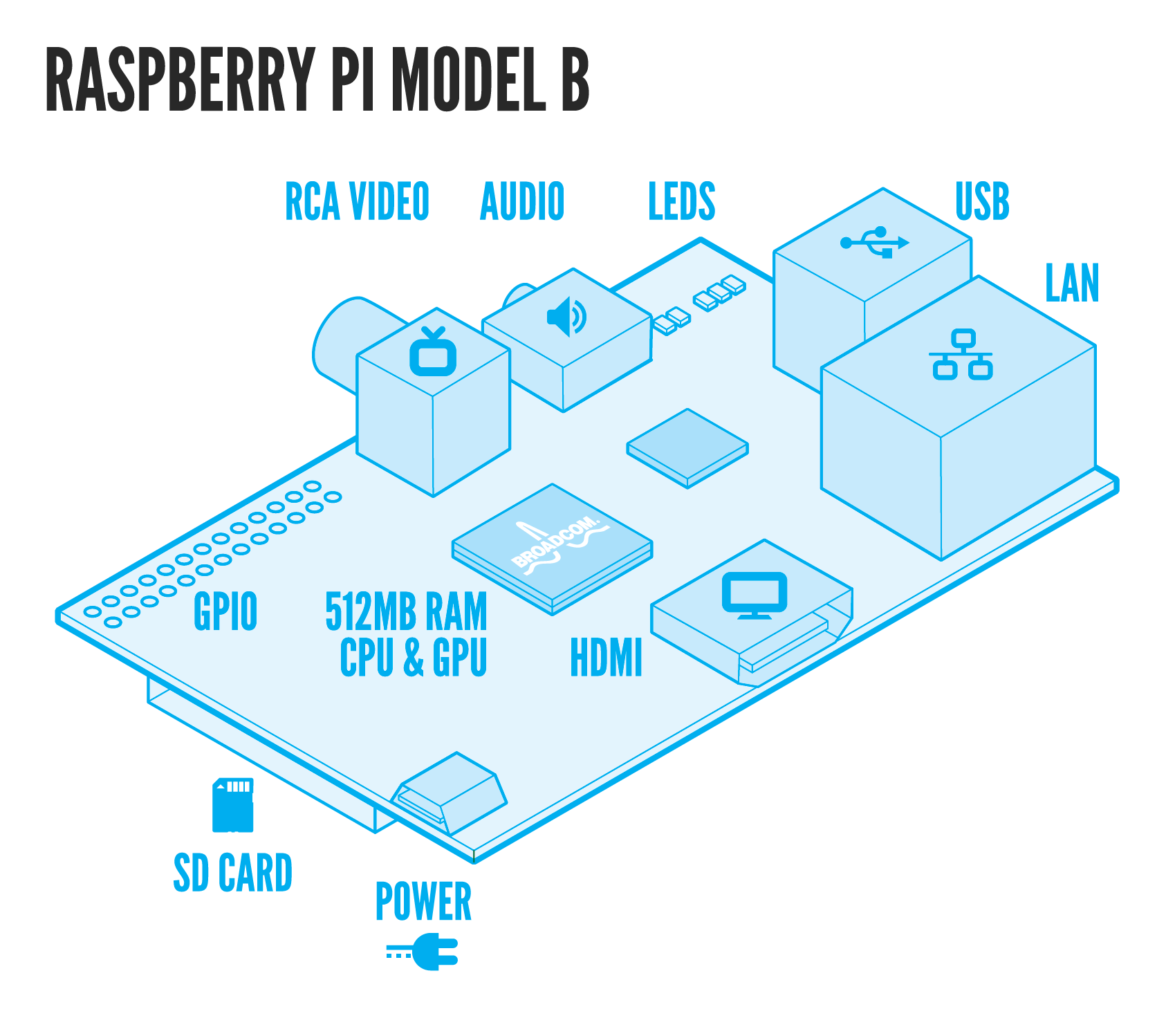
My Raspberry Pi Model B
The Raspberry Pi is perhaps the most sought after device by programmers, hobbyists, electronics gurus,modders and hackers in the embedded systems realms. It also doubles up as a powerful, energy efficient, light and flexible home multimedia system that can work across many peripherals.
So much is the usage that 24hrs after its release, it went out of stock leaving many disappointed. However soon after stocks were replenished and currently its available but not yet in Kenya, sad :-(
The updated model, Model B is the latest in the series from its predecessor, Model A. Am going to cover details later. So mine arrived 2weeks ago and since then its been exploring the device, day in day out, and to say the least about this device....its great. So lets get into details about this device
In the simplest of terms the Raspberry Pi is small ATM card sized computer developed in UK by the Raspberry Pi Foundation with the main intention to teaching basic computer skills in schools. Its distributed by Element 14 and RS Electronics online. The device is quite simple in design and appearance further enhancing its main purpose. There are 2 Models, A and B with B being the latest (29th Feb 2012) and the best. A was released much earlier so am going to concentrate on Model B.
General Specifications.
From an engineering perspective specs are what describe a machine and not paragraphs of information so am going to list the specs in the most understandable manner.
So much is the usage that 24hrs after its release, it went out of stock leaving many disappointed. However soon after stocks were replenished and currently its available but not yet in Kenya, sad :-(
The updated model, Model B is the latest in the series from its predecessor, Model A. Am going to cover details later. So mine arrived 2weeks ago and since then its been exploring the device, day in day out, and to say the least about this device....its great. So lets get into details about this device
- Introduction
- General Specifications
- Unboxing
- Usage & Images
- More specs and hacks
In the simplest of terms the Raspberry Pi is small ATM card sized computer developed in UK by the Raspberry Pi Foundation with the main intention to teaching basic computer skills in schools. Its distributed by Element 14 and RS Electronics online. The device is quite simple in design and appearance further enhancing its main purpose. There are 2 Models, A and B with B being the latest (29th Feb 2012) and the best. A was released much earlier so am going to concentrate on Model B.
General Specifications.
From an engineering perspective specs are what describe a machine and not paragraphs of information so am going to list the specs in the most understandable manner.
- Processor: Broadcom BCM2835 SoC (System on a Chip) - ARM1176JZF-S 700Mhz (can be overclocked to 1.3GHz [danger tho'])
- GPU: VideoCore IV
- RAM: 512Mb
Thursday, October 11, 2012
My Arduino UNO R3
Finally after what seemed forever my Arduino UNO arrived just as I had ordered. Here in Kenya, Arduinos are just making the breakthrough and they're hot cake. So before I go further, let me explain what exactly an Arduino is.
In the simplest of terms, an Arduino is an open-source electronics prototyping platform based on flexible, easy-to-use hardware and software. It's intended for artists, designers, hobbyists, and anyone interested in creating interactive objects or environments.
Arduino can sense the environment by receiving input from a variety of sensors and can affect its surroundings by controlling lights, motors, and other actuators. The micro-controller on the board is programmed using the Arduino programming language (based on Wiring) and the Arduino development environment (based on Processing). Arduino projects can be stand-alone or they can communicate with software running on a computer (e.g. Flash, Processing, MaxMSP).
To summarize the above, when you are working with Arduino you'll have 2 things, the Arduino Board and your PC. On your PC you'll be running the ADE (Arduino Development Environment) which when you've written the code, will be sent to the Arduino. Secondly you'll have the Arduino board connected to your PC via the cable that comes with it. (Same cable that is used for HP Printers)
Arduino can greatly enhance your creativity since it can run anything from a simple connection of a LED to a robot. Its completely open-source so you can do whatever your mind can do in terms to hacking and modding it. I've had mine for 8 Days so far and i cant remember a day passing without casting a glance at it or reading something new.
▲MY ARDUINO UNO: Note I've had to mount it on a cardboard to reduce chances of shorting the contacts on the underside of the board.
Thursday, September 20, 2012
The Ksh.1.32Billion Ngong Wind Power Phase 2
The Government has secured a Sh1.32 billion loan from both the Government of Belgium and KBC Bank of Belgium to finance the Ngong Hills Electricity Generation Wind Turbine phase 11.
The loan includes a state-to-state zero interest credit agreement of six million euros and a concessional credit agreement with the KBC Bank of Belgium of 6.36 million euros.
Speaking during the signing of the Ngong Hills Wind Turbine Electricity Generation Project phase 11, Finance Minister, Njeru Githae, said the loan has come at an opportune time as the country struggles to contain rampant deforestation.
And while Kenya has significant variety of potential energy sources – including hydro-power, geothermal, solar, wind and biomass – wood fuel accounts for 70 per cent of the country’s total energy consumption, with 80 per cent of the population depending on it for domestic energy needs. And the use of wood fuel has had a significant contribution to deforestation.
“Given the environmental negative impact development cost of hydro-electric energy and fuel energy challenges, the future source of clean energy of solar and wind generated electricity is ideal,” Githae told reporters at the Treasury building in Nairobi on Wednesday.
Tuesday, August 7, 2012
The Turbines Have Arrived!
Its with pleasure that the 'manufacturer' has finally delivered the Turbines. they came in yesterday and I have installed them except the nacelle which will be mounted towards the end due to mechanical breakage while other items are being installed too.
The towers are while made of durable plastic resin that will not corrode with the varying acidity of the soil and also termites that may come along.
As for the rest of the project, all is going well except for the quick growth of vegetation. I did drop a bean seed into the soil and Alas! within days a beanstalk was shooting. I left it to grow as long as it did not come into my way.
Plans are being improved to add residential home models which a friend of mine studying architecture will design for me. Electrical cables will be added thanks to my skills in AutoCAD Electrical 2012. Have a look...
▲ORIGINAL: The site before the turbines were installed.
Subscribe to:
Posts (Atom)