Showing posts with label 10A. Show all posts

Friday, May 14, 2010

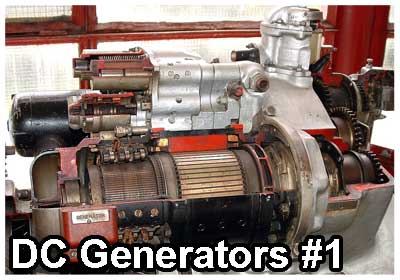
D.C. Generators #1

Defn:
An electrical generator is a machine that converts mechanical energy into electrical energy.
This conversion is based on the production of dynamically induced emf whenever a conductor cuts magnetic flux –Faraday’s Law of Electromagnetic Induction.
Essential Parts of an Electrical Generator
----Magnetic Field
----Conductor/Conductors which move so as to cut the flux

Wednesday, May 12, 2010

50kVA PMTx Substation Transformer

Name : 50kVA Pole Mounted Substation Transformer
Rating: 50kVA
Cooling: Oil Cooled
Application: Commercial,Heavy Residential,Farmhold

This  type of transformer is mainly used for Step-Down purposes of voltages in the range of 11kV~415/240V.


Thursday, April 22, 2010

Power System Network


A detailed explanation of the conversion and distribution of electric energy from the power station to consumer units.This post describes how electric energy moves from the power generating station through conductors of various sizes to consumers premises.To minimize losses and for economical reasons, electrical energy has to be converted into different magnitudes during transmission and distribution until the consumer load.


Thursday, March 25, 2010

Effects of Excess Current on the human body


Below 1 milliamperes (<1mA)
Generally not perceptible

1 milliamperes (1mA) 
Faint tingle.

5 milliamperes (5mA) 
Slight shock felt. Not painful but disturbing. Average individual can let go. Strong involuntary reactions can lead to other injuries.

6-5 milliamperes (6-5mA)
Painful shock, loss of muscular control. The freezing current or "let-go" range. Individual cannot let go, but can be thrown away from the circuit if exterior muscles are exited by the current.

Tuesday, March 23, 2010

Dangers of Electric Shock

The severity of injury from electrical shock depends on the amount of electrical current and the length of time the current passes through the body. For example, 1/10 of an ampere (amp) of electricity going through the body for just 2 seconds is enough to cause death. The amount of internal current a person can withstand and still be able to control the muscles of the arm and hand can be less than 10 milliamperes (milliamps or mA). Currents above 10 mA can paralyze or “freeze” muscles. When this “freezing” happens, a person is no longer able to release a tool, wire, or other object. In fact, the electrified object may be held even more tightly, resulting in longer exposure to the shocking current. For this reason, hand-held tools that give a shock can be very dangerous. If you can’t let go of the tool, current continues through your body for a longer time, which can lead to respiratory paralysis (the muscles that control breathing cannot move). You stop breathing for a period of time. People have stopped breathing when shocked with currents from voltages as low as 49 volts. Usually, it takes about 30 mA of current to cause respiratory paralysis.