Monday, January 30, 2012

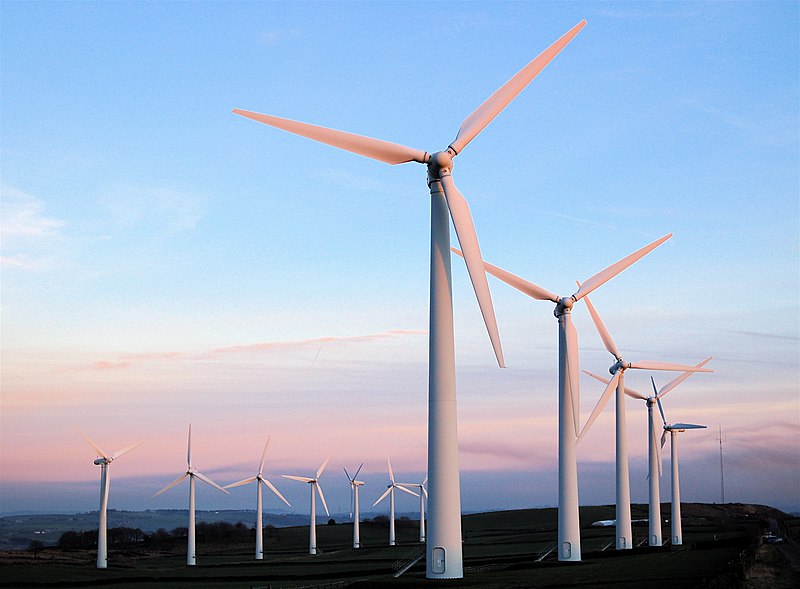
General Electric launches a 100MW Wind Power Station

The Kenya wind energy sector is getting a boost with a new wind power plant coming in just 2years.

General Electric has announced that it will set up a 100MW Wind Power Station in Ngong, Kenya which will be under a project called Kipeto Energy and construction is said to have already started.

General Electric is an international company with its headquarters in New York, US The project is estimate dto cost this company Ksh.25Billion and it will be ready by the time Lk. Turkana Wind Project is done.

Lets wait and see the outcome...

Saturday, January 7, 2012

World Future Energy Summit 2012

There are many energy events that one can afford to miss out but this one is not. The World Future Energy Summit is the hallmark of energy and innovation events. Coming this 18th to 21st January 2012 is this year's World Future Energy Summit 2012. Under the Patronage of H.H. General Sheikh Mohammed bin Zayed Al Nahyan Crown Prince of Abu Dhabi and Deputy Supreme Commander of the UAE Armed Forces.


Products to be Launched
Gold Wind 1.5 PMDD Wind Turbine.
This products offers:
  1. High power generating efficiency
  2. Compact,Light & Easy to transport
  3. Superior power quality and grid code compliance
  4. Significantly reduced maintenance costs and total operating expenditures.
  5. PMDD Technology, simple drive -train construction ,high reliability. Light and compact design compared to other turbines in its class. Sealed insulation design for excellent dust resistance. Full power converter, low voltage and zero voltage ride through capabilities for excellent grid connection characteristics
This product is being launched by GOLDWIND - China

Friday, January 6, 2012

3phase blog is 2years old

Once again 3phase blog gets the privilege of celebrating our second anniversary. Getting to this point cannot be taken for granted. It has been 2 years of talking about electricity, environment and wind energy.

Since I started this blog, 2 years ago, I have taught and at the same time learnt alot and I feel like a professor in these disciplines though am still learning.

To all those who have taken the time of contributing by comments and questions, am much indebted. Thanks you all and lets make 2012 another successful engineering year.

Kudos.

Wednesday, November 30, 2011

Kinagop Wind Park, 61MW

Kinagop Wind Park LTD, a local company here in Kenya has announced plans to build a 61MW wind park in Kinagopplateau in Nyandarua County.

The wind farm will have a nameplate capacity of 60.8 MW and the power will be fed into the grid. The company added to say that they will apply for a power generating license in December 5th.

The new plant will add to the nations wind power network breaking ranks to be the largest wind power station. Currently Kenya boasts of Ngong Wind Power as the largest farm with 5 turbines and 5.1MW output. The Lake Turkana Wind Power project, once complete will not only be the largest wind power in Kenya but even in Africa.

Monday, November 14, 2011

South Korea to build the world's largest Wind Farm

The 50Million people Republic of Korea has announced plans to build the world's largest Wind Power Station which will be offshore. The government has said that it will invest 10.2 trillion won (US$9 billion) in building a 2.5 Gigawatt (GW) offshore wind farm, the largest in the world.

Korea Electric Power(KEP), the countries largest power company, will be incharge of the project.The project will be divied into 3phases:

  1. 100MW, 353Million US Dollars, (Demonstartion Phase) - 2014
  2. 400MW, 1.4Billion US Dollars, Second Phase - 2016
  3. 2GW, 8.2Trillion won,Third Phase - 2019
Joining Korea Electric in the consortium of companies building the offshore wind farm are eight suppliers, including Doosan Heavy Industries and Construction Co., Daewoo Shipbuilding & Marine Engineering Co., and Hyundai Heavy Industries Co.

“South Korea is a latecomer to wind energy and is coming in at a very difficult time for the industry, where severe competition and falling turbine prices are squeezing the profits of the entire supply chain,” Bloomberg New Energy Finance lead wind analyst Justin Woo commented.

“Offshore wind is probably the best entry point for Korean companies into this sector, given their extensive shipbuilding and marine engineering experience as well as the country’s excellent offshore wind resources.”

Source: Bloomberg Business Week
Clean Technica

Sunday, November 13, 2011

Wind Farmer 4.2

When it comes to designing a wind farm project, no one does it better than WindFarmer 4.2. Yes, GL Garrad Hassan have released version 4.2 and I cannot wait to get my hands on.
This is what lies inside this release:

NEW: Increased support of ESRI shape files for site limits and object locations
NEW: Tools for design and optimisation of regular grid turbine layouts
NEW: Improved modelling of array effects between large wind farms

NEW: Expanded MCP+ Module with more displays and analysis
NEW: Arabic and Polish language versions.

You can try the demo here.

WindFarmer is wind energy software used to calculate turbine wake impacts, energy yield, and site conditions for determining turbine suitability. WindFarmer uses wind modeling inputs from WAsP or CFD software. WindFarmer is developed internally by the independent renewable energy consultant GL Garrad Hassan. WindFarmer can engage several types of wake models, including an Eddy Viscosity wake model which is more complex than the standard PARK model employed by WindPRO, a leading competitor.

More recently, the Eddy Viscosity model has been modified to account for previous discrepancies in the wake modelling of large wind farms. WindFarmer and WindPRO have both been trusted by investment banks to develop the published wind energy assessments used to determine financing for proposed wind farms.WindFarmer, like WindPRO, can optimize a wind farm layout for energy yield given turbine spacing, setback distances, shadow flicker, and acoustic noise level constraints.

Both products also feature wind farm visualization capabilities.

Tuesday, November 1, 2011

Makerere University tries out its new Electrical Vehicle

Makerere University students will this afternoon test drive their first electric car after three years of making.The Kiira EV made by the College of Engineering, Design, Art and Technology students, is the first electric vehicle to be made in Uganda.

The team leader, Mr Paul Musasizi, said the car is a clear demonstration of existence of innovation and skill at the university.
“When we started the project, we wanted to demonstrate that Uganda has as good talent as

that in the US or Germany and now that this is over, we expect and want it to be taken up,” Mr Musasizi said.

Waiting on production
The vehicle is a two-seater with a theoretical speed of 200km/hr and 150km/hr practically because of its light weight. It can be charged after running 80km.“We named it Kiira EV because we are fascinated about green energy and the first electricity generation in Uganda was at Kiira,” Mr Musasizi said of its naming.

It remains to be seen if the success of this vehicle can be translated into actual production.
Mr Musasizi said in an interview that the innovation demonstrates the faculty’s commitment to green transportation and that work has already started on a 28-seater public electric transport vehicle.

The vehicle is designed to replace the current diesel and petrol engine cars. Similar innovations have been made by car makers in Japan, German, France and the US.

Inspiration
Although some components of the car like the steering wheel and other minor accessories were imported from manufacturers outside Uganda, most parts of the car including the core body and combustion system were designed and built locally with the assistance of local craftsmen in places such as Katwe, an innovation suburb in Kampala.The Kiira project is a run-up to Vision 200, a car made by the Massachusetts Institute of

Technology, which attracted the participation of Makerere University students in 2008.Inspired by the first project, the students and university decided to launch their project in 2009.

It is one of the three science and technology projects at the faculty that were allocated Shs4.5 billion this financial year. The other projects include; the Laboratory

Infrastructure and Industrial Training.

The vehicle will be publicly tested at the faculty tomorrow and officially launched by the President later in the month.

Source: www.monitor.co.ug

Saturday, October 8, 2011

National Energy Conference 2011

The 2nd Annual National Energy Conference started in 4th to 6th of this week, I attended the Wednesday 5th event and the presentations were impressive.
There was a good number of exhibitors were in attendance to show their products in in the energy sector. The public attendance was good, though not many were there on that day.
The 3-day event was at KICC (Kenyatta International Conference Centre).


▲The Power Technics stand was the most impressive, they mounted a VAWT (Vertical Axis Wind Turbine) which was spinning perfectly. Their people at the stand were also helpful. This was a coincidence because I was on attachment there last year. Good work PTL
▲Geothermal Development Corporation, GDC had an impressive rig for drilling of steam at a well. This model was detailed and given again that I had gone for attachment there, I understood everything well. The person who modeled this, whoever you are, good work.

Another stand worth the mention was KETRACO-Kenya Electricity Transmission Company, a newly formed government corporation that is in charge of the transmission lines handed over from Kenya Power. The gentlemen who were there to explain were very informed and knew what they were saying. The stand looked presentable with a PC to show a GIS software for designing the transmission line network.

Recommendations
  1. Lake Turkana Wind Power should have been there, that was the primary reason why I attended.
  2. More exhibitors will increase public attendance.
To the event organizers, splendid work, keep up.

Thursday, September 8, 2011

10 Electrifying Facts About Your Fuse Box

In every home there is a distribution board, commonly called a fuse box or circuit breaker box. This enclosure controls all the electricity that comes into your home.  It is the heart of your home’s electrical system. Everything runs through the fuse box, but what is it? What, exactly, does it do? And why should you care?
  1. Fuses prevent fires- Fuses are made for the express purpose of giving their life for yours. They are the sacrificial lambs of the electronic world. When too much current passes through a fuse or breaker it ‘blows’, interrupting the flow of electricity. Without this safeguard, electrical surges could cause overheating or even fire.
  2. Fuses help protect your electronic equipment- Without fuses or breakers, any stray electrical surge- from lightning, large appliances, or the electric provider- could arc within your equipment. Even if the arc does not immediately destroy the electronics, repeated surges over time build up until the equipment finally degrades too much to function.
  3. Fuses need to be grounded-Grounding a fuse or breaker is an essential part of the safety system. When a fuse is blown the electricity is blocked from continuing down the line, but that electricity doesn’t just go away. It has to go somewhere, and that’s what grounding is for. By providing a safe outlet for that energy to be released, the danger of electric shock is minimized.
  4. Fuses need to match the current- The volts passing through the fuse or breaker should match the volts the fuse can take. If you have a fuse that is too small for the volts that are running through it, there is a possibility of arcing. If the fuse is too large, it may not blow when a surge occurs. Either way, the surge will continue into your electronic equipment and could cause a fire.
  5. Fuses and breakers should be upgraded every 20 years-If your house’s breaker box is older than 20 years, it may be time for an upgrade. Over time, energy use has changed. The demands placed on breaker boxes today are much greater, and an old system may not be able to handle it. If your breakers or fuses are constantly blowing, you may want to think about an upgrade. Generally if you have actual fuses, you have an electrical system that is over 50 years old. You may want to think about upgrading the entire system- including the wiring and outlets inside the house- for safety. An ounce of prevention is worth a pound of cure.
  6. Fuses should be kept clean and dry- As with all electrical equipment, it is important to keep fuses and breakers from getting wet. Most outdoor fuse boxes have a protective cover on the outside and inside to prevent rain from touching the wires. At least once a year take the time to check on the condition of the fuse box. Dust off any accumulated dirt and flip all the breakers on and off three times to assure they are not stuck. Turn off the electricity before preforming any maintenance!
  7. Breakers can be reset- Most home breaker boxes do not actually blow, they merely ‘trip’, or shut off. To reset the breaker, just take a look. In most cases, all the switches in the breaker box will be set to the on position. The breaker that has been tripped will be in either the off position or in the middle. If there are no visible sparks or signs of damage, turn that loose breaker switch into the off position and then flip it back on. The electricity should be immediately restored.
  8. Fuses are easy to replace- If you have a true fuse box, your job just got a little harder. Instead of a reset, fuses have to be replaced. Before replacing a fuse, make sure that all power to the fuse box is off. Remove the blown fuse without touching the metal. You can tell a fuse is blown by looking at it. It will appear burnt or the wire inside will be severed. Once the fuse is removed, simply replace it and turn the power back on to the fuse box. If the electricity is not restored, you may more than one blown fuse.
  9. Fuses blow for a reason- Find out what it is before you reset or replace. There is always a cause; it may be that you have overloaded the electrical system. If so, just turn off some electrical equipment and try again. Electric clothes dryers and ovens, heaters, air conditioners, vacuums and hair dryers are often the culprits of an overload. If there is any sign of an electrical fire- such as sparks, smoke, or burnt and melted wires- DO NOT reset the system. Call an electrician before restoring the power.
  10. There are more fuses than you think- Before you go out to reset your fuse box, take a look around. What is off? What is still on? You may not have to go outside at all. In some homes an internal fuse is connected to the electrical outlets. If so, there will be a red reset button located between the sockets. If only one plug is affected by the outage, try pressing that red button. It takes a little force to get it all the way in, but it should click. Before you do that, make sure that whatever equipment caused the issue is unplugged, and never use anything metal to push the reset button.
The importance of respecting and maintaining your fuse box cannot be overstated. In the United States, the annual number of people who die from electric shock is 1000, whereas the annual number of shark fatalities is 1. As George Carlin said, “Electricity is really just organized lightning”. So the next time a fuse blows and you’re left in the dark, be thankful. It could have just saved your life.

Source: compareelectricityrates

Thursday, September 1, 2011

Wind Energy Installation Systems

When you decide to install a wind system in your house, there are a number of wind installation systems that are available and they depend much your nearness to the power line.
The 3 common installation systems are:
  • Grid Connected
  • Grid Connected with battery backup
  • Off-Grid
The Grid Connected involves the wind turbine produces power (AC) which is fed into the house. Should the wind turbine produce more power than the demand of the house, this excess power is fed into the Grid via a meter which counts the units fed into the grid. On the other hand, should the wind system produce less power, the breaker box, shuts and opens power from the grid to be used. The Grid Connected with battery back-up  is similar to the Grid Connected  but inclusive of a battery. This battery is the storage of energy when the wind system is producing more power. In the event of a black-out energy from the battery is used. For the case of Off-Grid, the system is installed in places where the power grid is not available. It has batteries for harnessing excess power from the wind turbine.

In the next post we shall look in detail at the 3 systems.